


 Overland Park
Post-Op Rehab in Overland Park, KS: Get Back to Full Strength After Surgery
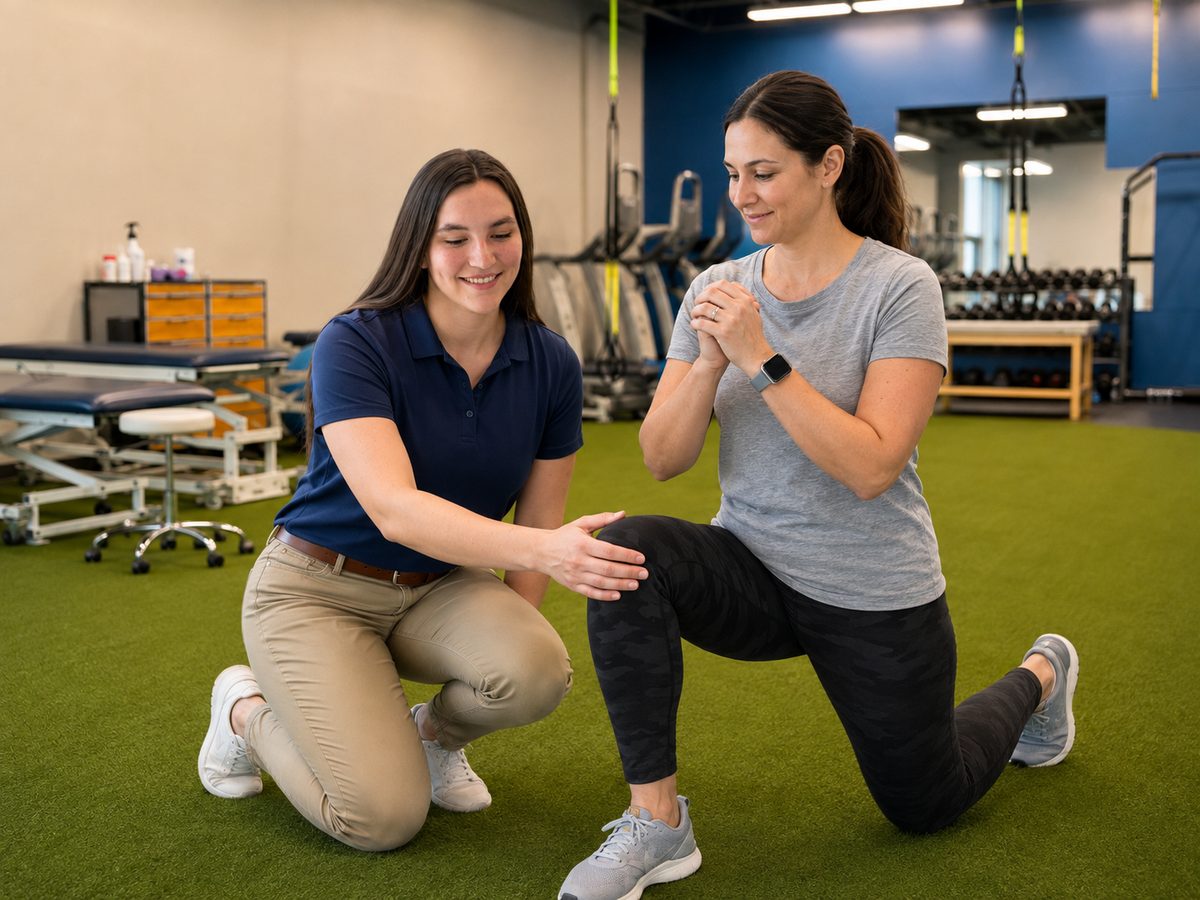
Surgery fixes the structure. Rehab is what gets you back to walking, lifting, running and sleeping without thinking about it. At TruMove Physical Therapy in Overland Park, we’ve helped Kansas City patients recover from surgery since 2006, with one-on-one care that follows your surgeon’s protocol and builds you back to the activities you had surgery for in the first place. And unlike most post-op rehab, we don’t stop at the surgery site: we also treat the back, hips and other areas that took the strain while you were compensating.
Whether you’re a week out from a knee replacement or months past an ACL reconstruction and still not trusting your leg, we’ll meet you where you are and map out what comes next.
Surgeries We Help You Recover From
We work with patients after most orthopedic and spine procedures, including:
- Knee: ACL reconstruction, meniscus repair or trim, total and partial knee replacement, patellar tendon and MPFL repair
- Hip: total hip replacement, hip arthroscopy and labral repair, periacetabular osteotomy (PAO)
- Shoulder: rotator cuff repair, labral (SLAP/Bankart) repair, shoulder replacement, subacromial decompression
- Spine: lumbar discectomy, laminectomy, spinal fusion, cervical fusion
- Foot and ankle: Achilles tendon repair, ankle ligament reconstruction, fracture fixation
- Elbow, wrist and hand: tendon repairs, fracture fixation, carpal tunnel release
Don’t see your surgery here? Give us a call at (913) 642-7746. If it involves your muscles, joints or spine, we can almost certainly help.
What Recovery Looks Like at TruMove
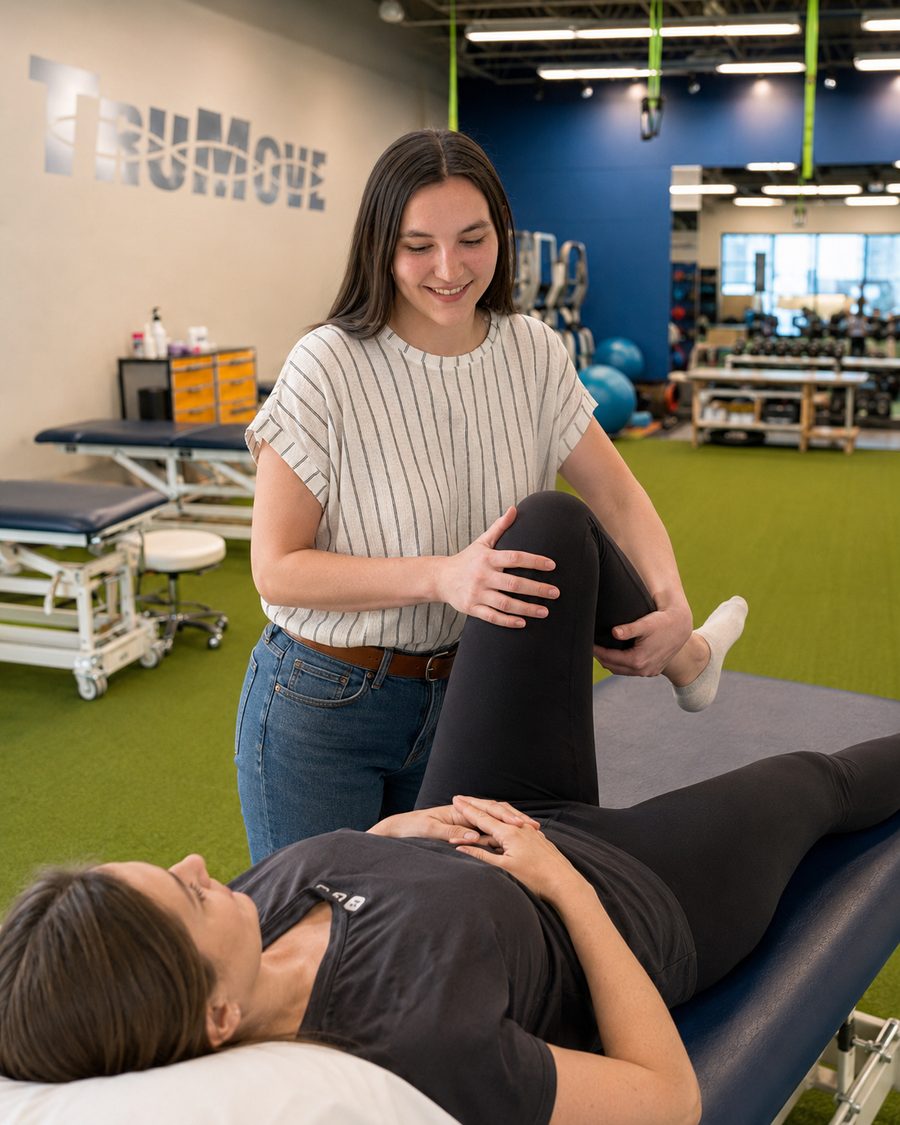
Every surgery and every body heals on its own timeline, and your surgeon’s protocol sets the guardrails. Within those guardrails, most recoveries move through four phases:
- Protect and calm things down. We manage pain and swelling, protect the repair, and start gentle motion so the joint doesn’t stiffen.
- Restore motion. Hands-on manual therapy and targeted exercise bring back range of motion, like fully straightening a knee or lifting an arm overhead.
- Rebuild strength and control. We load the muscles around the surgical site progressively, and retrain balance and movement patterns you may have lost while compensating.
- Return to what you love. We test your strength and movement against clear benchmarks before you go back to running, lifting, your sport or a physical job, so you return with confidence instead of guesswork.
Haven’t had surgery yet? Starting before your procedure can make recovery faster and easier. Read more about the benefits of prehab.
We Treat the Whole Body, Not Just the Surgery Site
Most post-op rehab focuses on the joint that had surgery. We also treat everything that moves with it, because that’s often what stands between you and a full recovery.
Before surgery, you probably spent months limping, guarding or favoring one side. After surgery, you compensate again. Those habits overload other joints, and they often outlast the recovery itself: a knee replacement patient whose back starts aching, or an ACL patient whose other knee gets sore.
So along with the surgical site, we evaluate and treat:
- After knee or hip surgery: hip and glute strength, the opposite leg, your lower back, and how you walk
- After shoulder surgery: the shoulder blade, upper back and neck
- After spine surgery: the hips and core, which take load off the healing spine
- After foot or ankle surgery: the knee and hip on the same side, and your balance
The result is more than a healed repair. You get back to moving the way you did before the problem started, with less chance of trading one injury for the next.
Tools That Help You Recover
Alongside hands-on care and exercise, TruMove has equipment many clinics don’t:
- Blood Flow Restriction (BFR) training: builds strength with light weights, which is valuable early after surgery when heavy loading isn’t safe yet.
- Anti-gravity treadmill: lets you walk and run at a fraction of your body weight, so you can start gait and running work sooner after knee, hip, foot or ankle surgery.
- Dry needling: releases muscles that tighten up and guard after surgery. TruMove was the first PT clinic in Kansas City to offer it.
- Deep tissue laser therapy and NormaTec compression: help manage pain and swelling between sessions.
Your therapist decides which of these fit your surgery and your surgeon’s protocol.
Working With Your Surgeon
You choose where you do your rehab. Your surgeon may suggest a clinic, but you can bring your referral and protocol to TruMove. We follow your surgeon’s restrictions, send progress updates, and flag anything that needs their attention.
Referral: Kansas allows direct access to physical therapy, so you don’t need a referral for us to evaluate you. After surgery, though, we’ll want your surgeon’s protocol, and some insurance plans require a referral to cover your visits. We’ll check that for you before your first appointment.
Insurance: We accept Blue Cross Blue Shield and Medicare, and provide superbills for out-of-network plans. We also offer discounted rates for self-pay patients. Our team will verify your coverage before your first visit.
Location: 7279 W 105th St, Overland Park, just off I-435 near 105th and Metcalf, a short drive from Leawood, Olathe, Lenexa and Shawnee.
Ready to start? Schedule your first visit or call (913) 642-7746.
Post-Op Rehab FAQ
How soon after surgery should I start physical therapy?
Most patients start within a few days to two weeks after surgery, depending on the procedure and your surgeon’s instructions. Starting on time helps prevent stiffness and scar tissue that are harder to fix later.
How long will post-op rehab take?
It depends on the surgery. Many joint and soft-tissue repairs take 6 to 12 weeks of therapy, while an ACL reconstruction usually takes 6 to 9 months before a full return to sport. We’ll give you a realistic timeline at your first visit and update it as you progress.
Can I switch to TruMove partway through my recovery?
Yes. Bring your surgeon’s protocol and any notes from your previous clinic, and we’ll pick up where you are. Many patients come to us when they’ve stalled somewhere else.
Will therapy hurt?
Some soreness is normal as you regain motion and strength, but rehab shouldn’t make you worse. We adjust based on how you respond, and we’ll teach you which discomfort is expected and which isn’t.
Do I need to see a doctor before starting?
You don’t need a referral for us to evaluate you in Kansas. After surgery, we’ll coordinate with your surgeon so your rehab follows their protocol, and we’ll check whether your insurance needs a referral.
Meet Our Expert Physical Therapists
 Drew Dischinger
Physical Therapist
PT, DPT, CERT. MDT, FAFS, NG360 GPS, CAFS, FDN Cert., CMTPT
 Luke Fischer
Physical Therapist
FAFS, XPS, CPT, CES
 Ian Winchester
Physical Therapist
 Erin Wachter
Physical Therapist
Staff Physical Therapist
TruMove PT - Services and Conditions We Treat
Conditions We Treat
- Physical Therapy
- Back Pain
- Neck Pain
- Knee Pain Treatment
- Shoulder Pain
- Sports Injuries
- Sciatica
- Injury Prevention
- Post-Op Rehab
- Orthopedic Rehab
- Spine/Back Rehab
- Core Strength, Stability & Balance
- Performance Training
- Torn ACL, Torn MCL and other ligament injuries
- Strains, Sprains, and Muscle Injuries
- Plantar Fasciitis / Foot Pain / Heel Pain
- Rotator Cuff Tendonitis
- Achilles Tendonitis
- Carpal Tunnel Syndrome
- Pelvic Pain
- Sacroiliac Joint Dysfunction
- Pelvic Rehab
- Disc Herniation
- Spondylosis
- Scoliosis
- Arthritis
- Upper Back Pain
- Tension Headaches
- Stenosis
- Bulging Disc
- Biceps Tendonitis
- Spondylolisthesis
- Osteoporosis
- Torticollis
- Fractures Treatment
- Safe and Effective Treatments for Pregnancy
- Ligament Sprain
- Incontinence
- Patellar Tendonitis
- Hip Pain Relief
- Spinal Stenosis
- Disc Disease Treatment
- Spine Anatomy Disorders
- Spinal Deformities


