


 Overland Park
Blog
February 24, 2026
Perimenopause Inflammation Foods & Diet Guide | TruMove KC
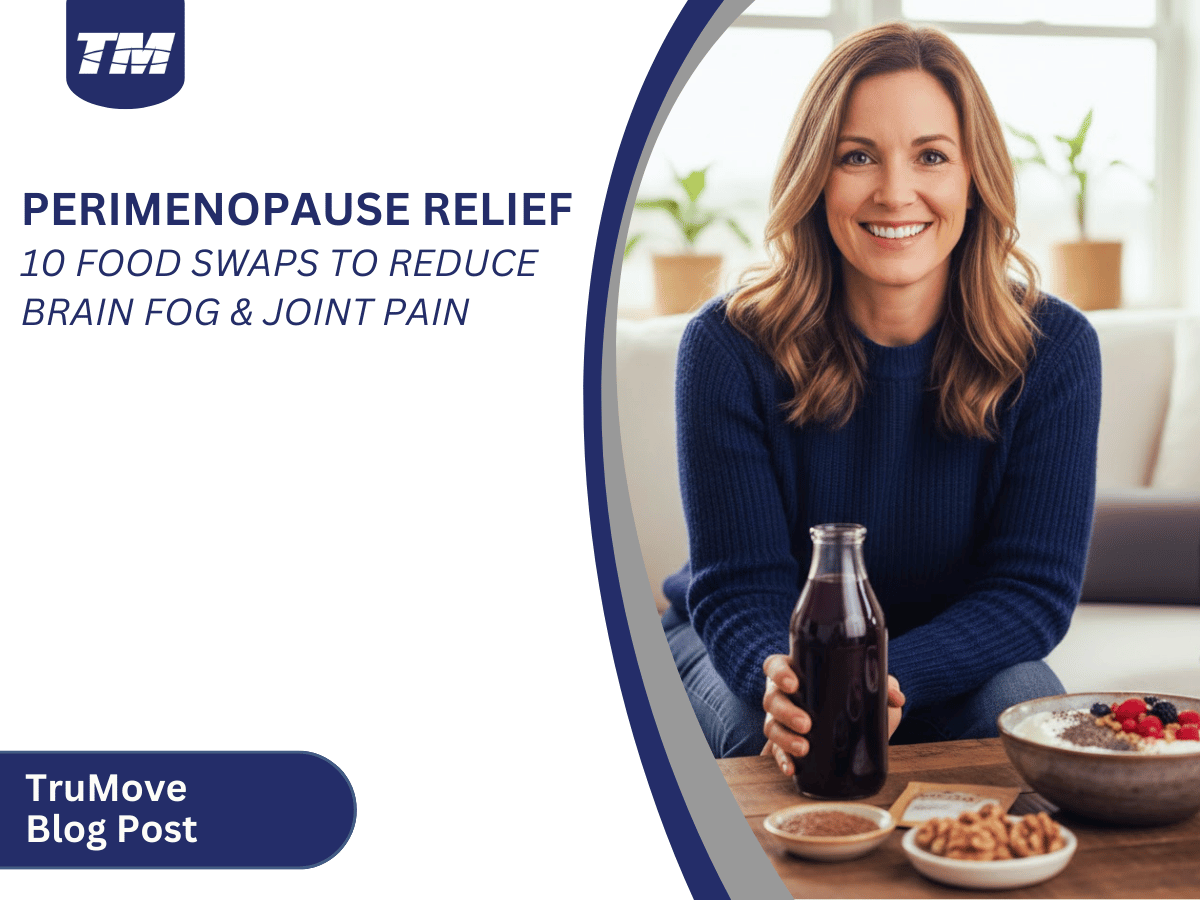
Perimenopause can make inflammation feel louder. At TruMove, we see it every day: women in their 40s and 50s who suddenly feel like their recovery has hit a wall. It’s not just one dramatic symptom; it’s a cumulative stack of “micro-flares.”
Maybe your knees ache more after a walk at Corporate Woods, or your morning coffee no longer clears the brain fog. While these shifts are hormonal, nutrition is one of the few levers you can pull to turn the volume down.
- The Problem: Dropping estrogen makes joints more sensitive to inflammation.
- The Triggers: Added sugar, alcohol, & excessive consumption of ultra-processed foods are some of the top triggers.
- The Strategy: 30g of protein and 5g+ of fiber at breakfast stabilizes your day.
- The Rule: If it’s ultra-processed and in a crinkly bag, it’s likely driving your “puffy” days.
Why the “Inflammation Baseline” Rises in Perimenopause
Perimenopause is the transition leading up to menopause. During this window, estrogen—a natural anti-inflammatory buffer—begins to decline. When estrogen drops, the body becomes more reactive to stress and certain foods. Our goal is to use food to lower your baseline stress so you can move better and recover faster.
Food is a powerful tool, but not a cure-all. If symptoms are drastically impacting your life, we recommend a multi-disciplinary approach including medical consultation alongside physical therapy as well as nutritional education from a certified professional.
How Your Diet Impacts Inflammation: 10 Food Swaps
1. Ultra-Processed Convenience Foods
Refined starch, added sugar & excessive use of industrial oils trigger cortisol and inflammation.
Swap: Greek yogurt with berries or raw walnuts for for antioxidants & Omega 3 anti-inflammatory fats.
2. Liquid Sugar (The Energy Rollercoaster)
Artificially sweetened coffee and soda cause insulin spikes that lead to brain fog.
Swap: Coffee naturally sweetened with honey & added cinnamon (for anti-inflammatory support) or sparkling water with lime (a natural anti-inflammatory).
3. Refined Carbohydrates
White bread acts like sugar in the body. You need fiber for hormone “detox.”
Swap: Quinoa, oats, or sprouted grain breads for stable energy.
4. Industrial Seed Oils (Omega-6 Overload)
High Omega-6 oils (soybean/corn) can drive joint stiffness when not balanced by Omega-3s.
Swap: Extra virgin olive oil or avocado oil.
5. Processed Meats (The Sodium Hit)
Sodium and nitrates lead to water retention and “puffy” hands and feet.
Swap: Baked/grilled seasoned chicken, wild salmon, canned tuna or hard-boiled eggs
6. Excess Alcohol (The Sleep Saboteur)
Alcohol is the #1 trigger for night sweats and disrupted sleep quality.
Swap: Tart cherry juice (natural melatonin) mixed with seltzer.
7. Fried Foods
Hard on a digestive system that becomes more sensitive during midlife.
Swap: Air-fried or roasted vegetables with a crispy parmesan coating.
8. “Healthy” Hidden Sugars
Low-fat items often replace fat with inflammatory sugars to maintain flavor.
Swap: Plain Greek yogurt with your own fresh fruit added.
9. High-Sodium Packaged Soups
Exacerbates midlife blood pressure fluctuations and abdominal bloating.
Swap: Batch-cooked homemade chili or lentil soup.
10. The “Combo Stack” (The Pattern)
Often, it isn’t one food; it’s the pattern: refined breakfast + deli lunch + evening wine.
The Reset: Make breakfast your “Anchor Meal”—high in protein and high in fiber.
Quick Anti-Inflammatory Swap Table
Take Control of Your Nutrition & Habits
Managing inflammation during perimenopause requires more than just knowing what to eat—it requires sustainable habits that fit your busy life. Whether you need 1-on-1 accountability or just a better roadmap for your week, we are here to help.
Work with our experts to build a personalized plan that turns down the volume on joint pain and fatigue.
Download our “Eating Healthy with a Busy Lifestyle” eBook for practical strategies you can use today.
Ready to stop guessing and start feeling better?
Frequently Asked Questions
Does inflammation actually increase during perimenopause?
Yes. The decline in estrogen reduces natural anti-inflammatory protection, leading to increased joint stiffness and muscle aches.
Can dry needling help with these aches?
Absolutely. It can “reset” neuromuscular trigger points that flare up when systemic inflammation is high, providing targeted relief while you work on nutrition.
Ready to turn down the volume on your pain?


