


 Overland Park
Blog
September 28, 2026
Pain Management & Physical Therapy | TruMove
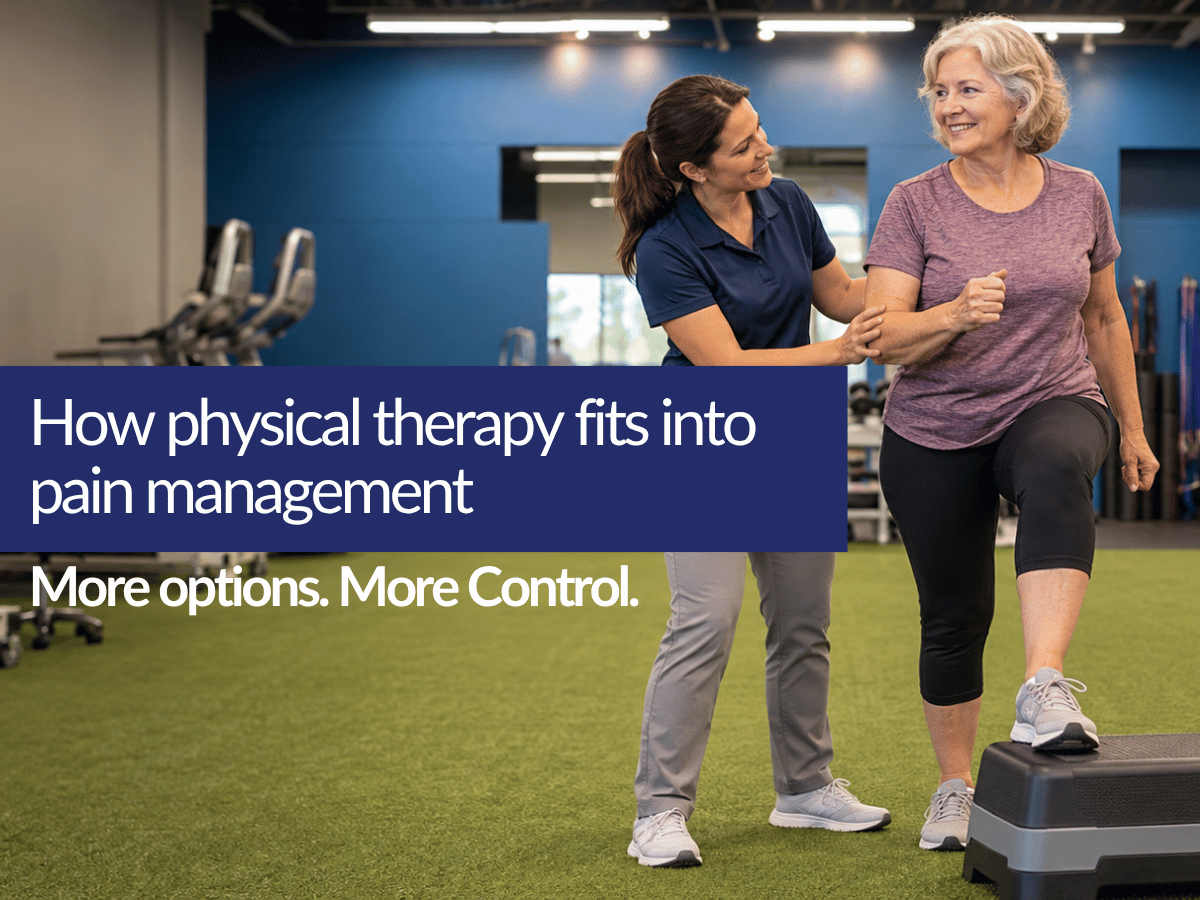
Searching for a pain management clinic usually means pain has started taking too much control. Maybe it is keeping you from working out, sleeping well, playing with your kids, getting through work, or simply moving without thinking about every step.
Pain Management Should Give You More Options, Not Fewer
Our goal is not to keep you coming back for endless appointments, and it is not to tell you that medication is always bad. Our goal is to give you more options.
We want to help you understand what affects your pain, build the strength and movement your body needs, and give you practical tools you can use on your own. The goal is more confidence, more independence and more control over how you manage pain.
Pain management can include medication, injections, physical therapy, exercise, education, behavioral health care and other medical treatments. The right approach depends on the person and the reason for the pain. There is no single treatment that is right for everyone.
TL;DR: What Should You Know About Pain Management?
A pain management clinic can offer many different forms of care. Depending on the clinic, that may include medication management, injections, physical therapy, psychological care, exercise, education and other treatments.
Pain medication is not automatically bad. Medication can be useful and appropriate. Different medications also carry different benefits and risks. Opioids, anti inflammatory medications and acetaminophen should not all be treated as if they are the same thing.
Physical therapy gives you another set of tools. The goal can include improving strength, mobility, movement tolerance, confidence and your ability to manage symptoms when they show up.
Our goal is independence. We want you to reach the point where you understand your body, know what to do when symptoms change, and have more control over your own pain management.
What Does a Pain Management Clinic Actually Do?
A pain management clinic is a healthcare setting focused on evaluating and treating pain. Some are physician led medical practices. Others use a broader team that may include physicians, physical therapists, occupational therapists, psychologists, nurses and other healthcare professionals.
The services offered can vary significantly from one pain management clinic to another. Treatment may include:
Medication management
Injections or other medical procedures
Physical therapy and exercise
Pain education
Occupational therapy
Behavioral or psychological strategies for chronic pain
Strategies for returning to work, exercise and everyday activities
Programs such as the Mayo Clinic Pain Rehabilitation Center use an integrated approach that includes physical therapy, psychology, occupational therapy, pain medicine and education. That is an important point: pain management does not automatically mean pain medication.
It also does not mean that physical therapy is the right answer for every type of pain. Good pain management is about finding the combination of care that makes sense for the individual.
Does Pain Management Always Mean Taking Medication?
No. Medication is one tool in pain management, but it is not the only tool.
There are situations where medication can be helpful. Over the counter medications may provide short term relief for certain problems. Prescription medication can also be appropriate depending on the condition, severity of pain, medical history and other factors.
The important distinction is that every medication has potential benefits and potential risks.
For example, acetaminophen is considered safe and effective when used as directed, but taking too much can cause serious liver damage. Nonsteroidal anti inflammatory drugs, commonly called NSAIDs, can be useful for pain and inflammation but may carry gastrointestinal, kidney or cardiovascular risks for some people.
Prescription opioids are a different category. They can have an appropriate role in treating some forms of moderate to severe pain, including certain injuries, surgeries and medical conditions. They also carry risks that include tolerance, physical dependence, opioid use disorder and overdose.
The CDC recommends maximizing appropriate nonopioid and nonmedication approaches for many common types of pain, particularly when dealing with subacute or chronic pain.
Pain management should give you more options over time, not fewer.
That is the way we prefer to think about it. The goal is not to tell someone that medication is bad. The goal is to help make sure medication is not the only way they know how to respond to pain.
Where Does Physical Therapy Fit Into Pain Management?
Physical therapy can be an important part of pain management when pain is connected to movement, strength, mobility, injury, recovery, physical capacity or the way the body is responding to activity.
Current pain guidelines support active approaches such as exercise for several common musculoskeletal pain conditions. The CDC identifies exercise therapy, including physical therapy, among the nonmedication options that can improve pain and function for certain conditions. The World Health Organization also recommends education and exercise as parts of care for chronic primary low back pain.
That does not mean simply handing someone a sheet of exercises.
A good physical therapy plan starts by figuring out what matters to you. Your goal might be getting through a workday without your back controlling every decision. It might be returning to running, lifting weights, golfing, gardening, traveling, sleeping comfortably or keeping up with your kids.
The treatment plan should connect to that goal.
What Can Physical Therapy Give You That You Can Use on Your Own?
This is where we believe physical therapy can become much more than another appointment on your calendar.
The long term value is learning what you can do when you are not standing next to your physical therapist.
The Goal Should Not Be Endless Appointments
There is an important difference between receiving care and becoming dependent on care.
Sometimes frequent treatment is appropriate. A recent surgery, significant injury or complicated condition may require closer supervision for a period of time. Chronic pain can also require help from several healthcare professionals.
But for many musculoskeletal problems, the bigger goal should be to help you develop the ability to manage more of your health yourself.
The TruMove Approach
We do not want your only pain management strategy to be scheduling another appointment.
We want you to understand your body, know what helps, know what tends to aggravate the problem, and have a practical plan you can use at home, at work, at the gym or wherever life takes you.
The win is not keeping you in physical therapy forever. The win is helping you need us less.
Pain Is Personal, So Pain Management Should Be Personal Too
Two people can have pain in the same part of the body and need very different plans.
The International Association for the Study of Pain describes pain as a personal experience influenced to different degrees by biological, psychological and social factors. That does not mean pain is imaginary. It means pain is more complicated than simply pointing to a sore spot.
Your previous injuries, current strength, mobility, sleep, stress, activity level, work demands, training load, medical history and goals can all matter when building a plan.
That is why a one size fits all pain management program often misses the point.
A runner trying to get back to ten miles has different needs from someone trying to sit comfortably through a workday. A golfer with recurring back pain has different demands from a warehouse employee who lifts throughout an eight hour shift.
Personalized pain management starts by asking what you need your body to do and then building toward it.
Can Physical Therapy Help You Rely Less on Pain Medication?
For some people, it may.
Physical therapy cannot promise that you will never need pain medication. It should not tell you to stop a prescribed medication without discussing that decision with the clinician who prescribed it.
What physical therapy can do is give you additional ways to address pain and function. If exercise, movement strategies, strength, mobility, activity changes and better self management help control symptoms, you may have less reason to depend on medication as your only strategy.
CDC guidance specifically encourages the use of appropriate nonmedication approaches for pain and notes that some noninvasive treatments can produce improvements in pain or function that continue after treatment ends.
That idea matters to us.
A treatment becomes much more valuable when some of its benefit stays with you after you leave the clinic.
What Does Managing Pain on Your Own Terms Look Like?
Managing pain on your own terms does not mean ignoring doctors, refusing medication or trying to solve every problem by yourself.
It means having choices.
You may choose medication when it makes sense. You may work with a pain management physician. You may benefit from an injection. You may need a specialist. You may use physical therapy. Often, more than one approach can work together.
The difference is that you also have tools that belong to you.
You know which movements tend to help.
You know how to modify activity when symptoms increase.
You have exercises that match your needs instead of a generic routine.
You understand how to gradually rebuild activity instead of avoiding it indefinitely.
You know when a problem is something you can manage and when it is time to get professional help.
That is freedom in pain management. It is not the promise of never feeling pain again. It is having more control over what happens next.
Pain Relief and Function Are Both Important
It is natural to want a pain score of zero. We understand that.
But pain relief is not the only measure of progress. Being able to walk farther, sleep better, return to exercise, lift your child, finish a workday, play a round of golf or stop planning your entire day around your symptoms can also represent meaningful improvement.
Sometimes pain improves quickly. Sometimes function improves first. With persistent pain, progress can take time and may not follow a perfectly straight path.
A good pain management plan should keep asking two questions: How do you feel, and what are you able to do?
When Is a Pain Management Clinic the Better Next Step?
Physical therapy is one part of pain management. There are situations where a physician, pain specialist or multidisciplinary pain management clinic may be an important part of the plan.
That may include pain that is severe or difficult to control, complex nerve related pain, pain related to significant medical conditions, symptoms that are not responding as expected, or situations where medication management, diagnostic testing or procedures need to be considered.
Some people benefit most when physical therapy and medical pain management work together rather than treating them as competing options.
Some Pain Needs Medical Attention First
New loss of bowel or bladder control, numbness around the groin or saddle area, rapidly worsening weakness, severe symptoms after major trauma, unexplained fever with significant pain, or other sudden neurological changes can require urgent medical evaluation.
Physical therapy is not a substitute for emergency or medically necessary care.
What If You Are Searching for a Pain Management Clinic in Overland Park?
When someone searches for a pain management clinic in Overland Park or the Kansas City area, the first step is figuring out what kind of help they actually need.
If your pain is affecting the way you move, work, train or participate in everyday activities, a physical therapy evaluation may help determine whether there are movement, strength, mobility or physical capacity issues that can be addressed.
TruMove is a physical therapy clinic in Overland Park that specializes in activity related pain, movement and performance. We are not a physician led interventional pain clinic. Our role is to evaluate the musculoskeletal side of the problem, build an individualized plan and help you develop strategies you can continue using independently.
You can learn more about physical therapy in Overland Park or read about what happens during a physical therapy evaluation.
A Better Goal for Pain Management: More Control
Pain can make life feel smaller. You stop doing one activity because it hurts. Then another. Before long, pain is making decisions for you.
Good pain management should work in the other direction.
It should help you understand your options. It should help you make informed decisions about medication and other medical care. When appropriate, it should help you rebuild strength, movement and confidence. Most importantly, it should give you strategies that continue to be useful after an appointment is over.
We cannot promise that every person will become completely pain free. No responsible pain management clinic or physical therapist should make that promise.
What we can work toward is helping you move better, function better, understand your body better and have more ways to respond when pain shows up.
Your treatment should not take control away from you. It should help give control back.
Build a Pain Management Plan Around You
Pain that limits your movement, exercise, work or everyday life deserves more than a generic plan. TruMove Physical Therapy can evaluate how you move, identify areas that may be contributing to the problem and build a plan around your goals.
Frequently Asked Questions About Pain Management
What does a pain management clinic do?
A pain management clinic evaluates and treats pain using one or more approaches. Depending on the clinic, care may include medication, injections, physical therapy, exercise, pain education, behavioral health care and other treatments. Some clinics use a multidisciplinary team while others focus primarily on medical procedures or medication management.
Does pain management mean taking opioids?
No. Opioids are one possible medical treatment for certain types of pain, but pain management can also include nonopioid medications, physical therapy, exercise, education, behavioral strategies, injections and other approaches. The appropriate treatment depends on the individual and the condition.


