


 Overland Park
Blog
December 15, 2025
Dry Needling, T.J. Watt, and What the Headlines Missed | TruMove PT
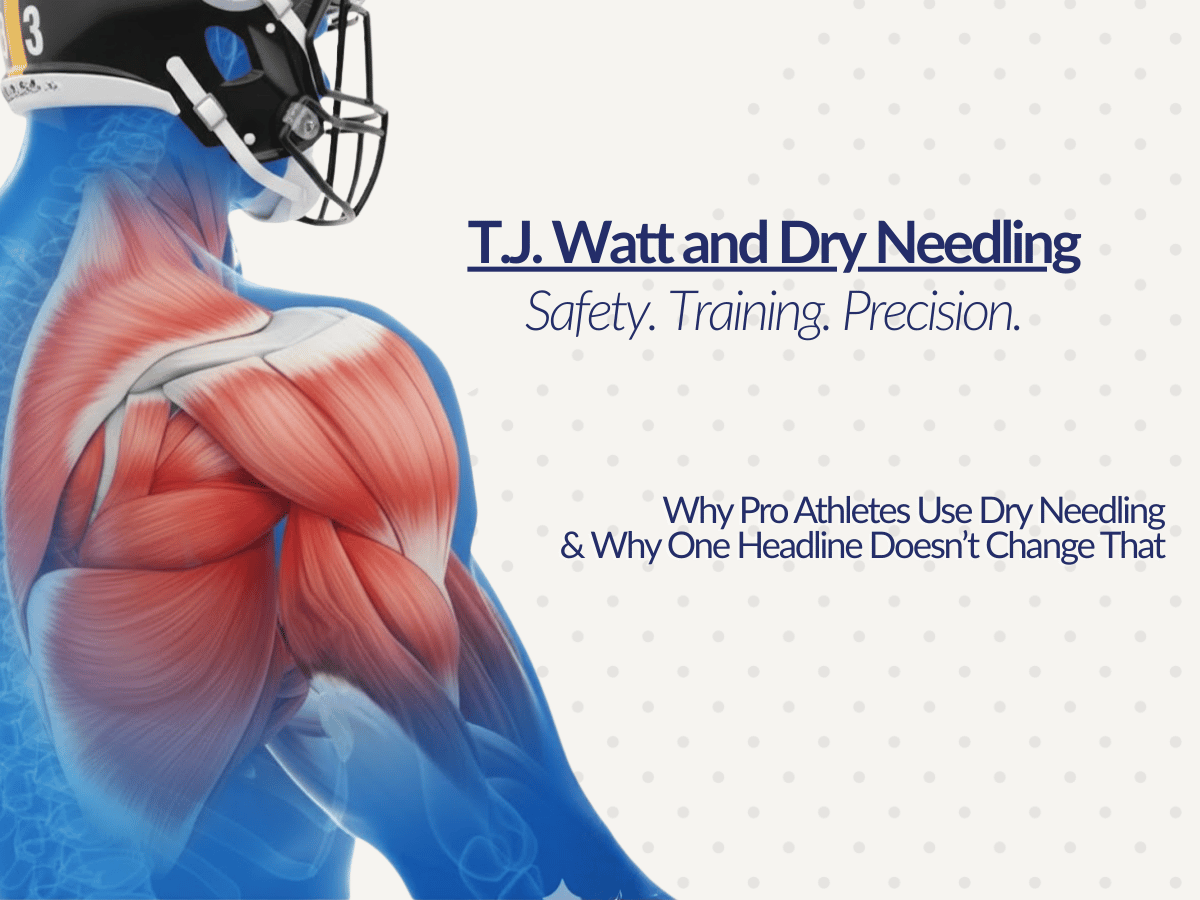
When news broke that NFL star T.J. Watt experienced a partially collapsed lung, headlines moved fast, and context moved slowly.
Reports later revealed the issue occurred during monitoring after a dry needling treatment, which quickly led to concern, confusion, and fear around a therapy that is widely used across professional and everyday athletics.
At TruMove Physical Therapy, we believe it’s important to slow the conversation down and explain what actually happened, what dry needling is (and isn’t), and why this isolated incident shouldn’t overshadow the overwhelming evidence supporting dry needling as a safe and effective treatment when performed by properly trained clinicians.
What Happened With T.J. Watt?
The only confirmed medical detail shared publicly was that Watt experienced a pneumothorax, or partially collapsed lung. According to public discussion, this information was not released directly by the team but referenced by his brother, J.J. Watt.
Importantly, there has been no indication of malpractice or improper care, only that the condition was identified, monitored, and treated appropriately.
A pneumothorax can occur in three general ways:
- Spontaneous (the most common)
- Traumatic (from impact or injury)
- Medical-procedure–related (the least common)
In elite athletes, spontaneous pneumothorax is not unheard of due to body type, training demands, and high-intensity exertion, even without any intervention.
Where Dry Needling Fits Into the Conversation
Dry needling is a skilled physical therapy technique used to target myofascial trigger points, tight, irritated muscle tissue that can limit movement, reduce strength, and contribute to pain.
When performed by clinicians with advanced training, dry needling has a strong safety profile. According to risk-management data and continuing education leaders such as MyoPain Seminars, serious adverse events are exceedingly rare, especially when anatomical precautions and patient screening are followed.
At TruMove, dry needling is never a standalone or casual treatment. It’s part of a broader clinical decision-making process that considers anatomy, symptoms, movement patterns, and risk factors.
Expert Insight
“Dry needling is a tool, not a shortcut. When used appropriately by a properly trained clinician, it can be extremely effective. But just as importantly, knowing when not to needle is part of responsible care.”
— Ethan McCoy, DPT
Certified Myofascial Trigger Point Therapist / Dry Needling (CMTPT/DN)
Putting Dry Needling Risk Into Perspective
Research examining adverse events associated with dry needling has found that major complications are exceedingly rare, occurring in fewer than 1 in 1,000 treatments (<0.1%) in a large prospective survey of more than 20,000 dry needling sessions.
Importantly, the same analysis placed dry needling’s safety profile in context with other commonly used pain-relieving interventions. Reported adverse event rates were over 78% for opioids, approximately 13.7–35% for NSAIDs such as ibuprofen, and about 18.7% for aspirin.
When viewed side by side, these comparisons highlight that the rate of serious adverse events associated with dry needling is substantially lower than many widely accepted medications — despite those medications being used routinely without the same level of public concern.
Why Training, Regulation, and Experience Matter
In Kansas, dry needling is a regulated medical procedure and that didn’t happen by accident. At TruMove Physical Therapy, our clinicians have been actively involved in advancing education, safety standards, and regulation around dry needling in the state.
TruMove has hosted advanced dry needling certification courses, worked alongside professional organizations, and supported efforts to ensure this treatment is performed by properly trained, licensed clinicians, not as a shortcut, but as a skilled intervention.
This emphasis on training and oversight is exactly why isolated headlines shouldn’t define a treatment that has helped countless patients, from everyday movers to elite athletes, recover and perform at a high level.
Ethan emphasizes that safety in dry needling comes down to education, anatomical precision, and clinical judgment, not headlines.
What This Means for Everyday Patients
High-profile cases can make treatments sound riskier than they are, especially when nuance gets lost. For the average patient, dry needling performed by a properly trained physical therapist remains a safe, evidence-supported option for reducing pain and improving movement.
Just like any medical intervention, context matters. The provider’s training matters. And the plan of care matters.
At TruMove, dry needling is used thoughtfully, as one part of a comprehensive approach designed to help people move better, recover faster, and stay active.
If You Have Questions About Dry Needling, You’re in the Right Place
If this is the first time you’re hearing about dry needling, the best next step isn’t fear, it’s a conversation. We encourage you to ask questions and ensure you’re working with a licensed physical therapist who is properly trained and certified in dry needling. Experience, education, and anatomical knowledge matter.
At TruMove Physical Therapy, dry needling is never a one-size-fits-all solution. It’s one of many tools we use thoughtfully, safely, and intentionally — always as part of a personalized plan designed to help you move better, with confidence.
As Kansas City’s dry needling leaders, TruMove clinicians have helped advance education, training, and safety standards for dry needling in the region, including hosting certification courses and supporting responsible regulation in the state of Kansas.


