


 Overland Park
Blog
February 24, 2026
Perimenopause Inflammation & Joint Pain Diet Guide | TruMove Overland Park
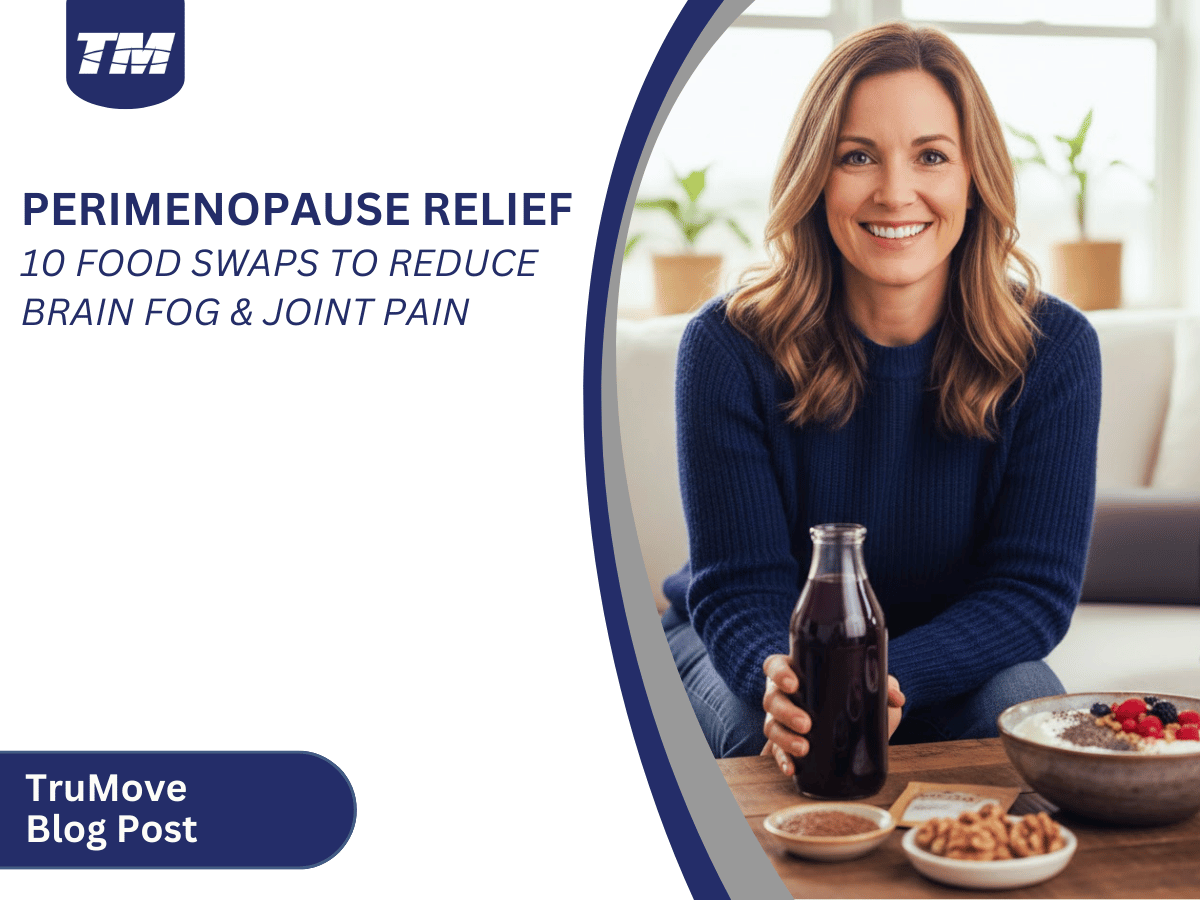
Perimenopause can make inflammation feel louder. At TruMove in Overland Park, we see it every day: women in their 40s and 50s who suddenly feel like their recovery has hit a wall. It’s not just one dramatic symptom — it’s a cumulative stack of “micro-flares.”
Maybe your knees ache more after a walk at Corporate Woods, or your morning coffee no longer clears the brain fog. While these shifts are hormonal, nutrition is one of the few levers you can pull to turn the volume down. This guide gives you 10 specific food swaps our Overland Park physical therapists recommend to patients managing perimenopause inflammation.
- The Problem: Dropping estrogen makes joints more sensitive to inflammation.
- The Triggers: Added sugar, alcohol, and ultra-processed foods are the top culprits.
- The Strategy: 30g of protein and 5g+ of fiber at breakfast stabilizes your entire day.
- The Rule: If it’s ultra-processed and in a crinkly bag, it’s likely driving your “puffy” days.
Why the Inflammation Baseline Rises During Perimenopause
Perimenopause is the transition leading up to menopause — typically starting in the early-to-mid 40s. During this window, estrogen (a natural anti-inflammatory buffer) begins to decline. When estrogen drops, your body becomes measurably more reactive to physical and dietary stress. Joints that recovered easily before now stay sore longer. Foods that never bothered you start triggering brain fog or bloating.
At our Overland Park clinic, we work with a lot of women navigating this transition alongside an active lifestyle — whether that’s running the trails at Tomahawk Creek, keeping up with kids, or returning to the gym after an injury. The physical therapy piece addresses what’s happening in your muscles and joints. The nutrition piece addresses the systemic environment those joints are living in. Both matter.
Food is a powerful tool, but not a cure-all. If symptoms are significantly impacting your quality of life, we are here to help, with a no-referral-required medical consultation, physical therapy in Overland Park, and guidance from a certified nutrition professional.
10 Food Swaps for Perimenopause Inflammation Relief
1. Ultra-Processed Convenience Foods
Refined starch, added sugar, and industrial oils found in packaged snacks trigger a cortisol response that amplifies joint inflammation. During perimenopause, when your baseline is already elevated, these foods have an outsized effect. You don’t need to eat perfectly — you need to lower the daily burden.
Swap: Greek yogurt with berries or a small handful of raw walnuts. Both provide antioxidants and Omega-3 anti-inflammatory fats that your joints actually use.
2. Liquid Sugar (The Energy Rollercoaster)
Sweetened coffee drinks, sodas, and flavored waters cause rapid insulin spikes that are followed by energy crashes — and inflammation spikes. During perimenopause, insulin sensitivity changes, so these swings hit harder than they used to.
Swap: Black coffee naturally sweetened with a touch of honey and cinnamon (which has genuine anti-inflammatory properties), or sparkling water with lime as an afternoon replacement for soda.
3. Refined Carbohydrates
White bread, white rice, and most crackers behave like sugar in the body — they spike blood glucose quickly and provide almost no fiber. Fiber matters especially during perimenopause because it supports the gut bacteria involved in estrogen metabolism.
Swap: Quinoa, steel-cut oats, or sprouted grain breads. These digest more slowly, support stable energy, and feed the gut microbiome your hormones depend on.
4. Industrial Seed Oils (Omega-6 Overload)
Soybean, corn, and sunflower oils are high in Omega-6 fatty acids. When Omega-6 intake is significantly higher than Omega-3 intake — which is the case in most American diets — it creates a pro-inflammatory imbalance that shows up in joints, tendons, and connective tissue.
Swap: Extra virgin olive oil for cooking and dressings, or avocado oil for higher-heat cooking. Both have well-documented anti-inflammatory profiles.
5. Processed Meats
Deli meat, sausage, and bacon carry high sodium loads and nitrates that contribute to water retention and vascular inflammation. The “puffy hands and feet” feeling many women report during perimenopause is often diet-driven, not just hormonal.
Swap: Baked or grilled chicken, wild-caught salmon, canned tuna, or hard-boiled eggs. All high in protein, which is critical for muscle preservation during this transition.
6. Excess Alcohol
Alcohol is the most underrated inflammation trigger for perimenopausal women. It disrupts sleep architecture (reducing deep sleep), is the number one dietary trigger for night sweats, and directly increases systemic inflammatory markers. Even moderate drinking during this phase can blunt recovery significantly.
Swap: Tart cherry juice mixed with sparkling water. Tart cherry contains natural melatonin precursors and has been studied for its role in reducing muscle soreness and improving sleep quality.
7. Fried Foods
The digestive system becomes more sensitive during midlife hormonal transitions. Fried foods — high in damaged fats and hard to digest — tax a system that’s already under more strain.
Swap: Air-fried or oven-roasted vegetables with a crispy parmesan coating. You get the satisfying texture without the inflammatory fat load.
8. “Healthy” Foods with Hidden Sugars
Low-fat yogurt, protein bars, flavored oatmeal packets, and most bottled salad dressings quietly carry 10–20g of added sugar per serving. Food manufacturers replace fat with sugar to maintain flavor — and the label “low fat” or “high protein” disguises this.
Swap: Plain Greek yogurt with fresh fruit you add yourself. Read labels: anything with more than 5g of added sugar per serving deserves a second look.
9. High-Sodium Packaged Soups and Broths
A single can of soup can carry 800–1,200mg of sodium — nearly half a day’s recommended intake. This exacerbates midlife blood pressure fluctuations and contributes to abdominal bloating that many women misattribute entirely to hormones.
Swap: Batch-cooked homemade chili or lentil soup. Make a large pot on Sunday and it covers lunch for the week — low sodium, high fiber, high protein.
10. The Combo Stack (The Real Pattern)
Often it isn’t one food — it’s the daily pattern: refined pastry at breakfast, deli sandwich at lunch, evening glass of wine. Each choice is “not that bad.” Together they create a sustained inflammatory environment your body never fully recovers from.
The Reset: Make breakfast your Anchor Meal. Target 30g of protein and at least 5g of fiber before anything else. This one change stabilizes blood sugar, reduces cravings, and lowers the inflammatory load for the entire rest of the day.
Quick Anti-Inflammatory Swap Table
What to Eat More Of During Perimenopause
Reducing inflammatory triggers is half the equation. The other half is building in more of what actively supports recovery:
- Fatty fish (salmon, sardines, mackerel) — highest dietary source of Omega-3s, directly counters joint inflammation
- Dark leafy greens (spinach, kale, arugula) — rich in magnesium, which drops during perimenopause and is connected to muscle cramps and poor sleep
- Berries — anthocyanins act as natural COX-2 inhibitors (the same pathway ibuprofen targets)
- Turmeric with black pepper — curcumin is well-studied for joint inflammation; black pepper increases absorption by up to 2,000%
- Legumes — high fiber, plant protein, and phytoestrogens that may gently buffer declining estrogen levels
- Bone broth or collagen peptides — support connective tissue integrity, which becomes more important as estrogen-driven collagen synthesis declines
Take Control of Your Nutrition & Habits in Overland Park
Managing inflammation during perimenopause requires more than knowing what to eat — it requires sustainable habits that fit your life. Our Overland Park team offers 1-on-1 coaching alongside physical therapy to help you address both the structural and nutritional sides of recovery.
Work with our Overland Park team to build a personalized plan that turns down the volume on joint pain and fatigue.
Download our “Eating Healthy with a Busy Lifestyle” eBook for practical strategies you can use today.
Ready to stop guessing and start feeling better?
Frequently Asked Questions
Does inflammation actually increase during perimenopause?
Yes. The decline in estrogen removes a key natural anti-inflammatory buffer. Research shows that perimenopausal women experience measurably higher levels of inflammatory markers like CRP (C-reactive protein), which directly correlates with joint stiffness, slower recovery, and increased muscle soreness.
How long does it take for diet changes to reduce perimenopause inflammation?
Most women notice meaningful changes in energy, joint stiffness, and bloating within 2–4 weeks of consistently reducing processed foods, added sugar, and alcohol. Full systemic changes in inflammatory markers typically appear over 8–12 weeks. Starting with the Anchor Meal strategy (30g protein + 5g fiber at breakfast) often produces the fastest early results.
Can physical therapy help with perimenopause joint pain?
Absolutely. Physical therapy in Overland Park addresses the structural side of perimenopause symptoms — joint mobility, muscle strength, and movement patterns that protect inflamed tissue. Nutrition manages the systemic environment. Together they’re significantly more effective than either alone.
Can dry needling help with perimenopause aches and trigger points?
Yes. Dry needling can reset neuromuscular trigger points that flare up when systemic inflammation is elevated. It’s particularly effective for the neck, shoulders, hips, and knees — the areas most commonly affected during perimenopause. Many of our Overland Park patients use it as part of a broader recovery plan alongside nutritional changes.
What vitamins and supplements help with perimenopause inflammation?
The most evidence-supported options are Omega-3 fatty acids (fish oil), Vitamin D3 (which declines during menopause and is tied to joint pain), magnesium glycinate (for sleep and muscle cramps), and curcumin with black pepper. That said, food-first is the more sustainable approach — supplements work best when layered on top of a solid dietary foundation.
Is perimenopause inflammation permanent?
No. While the hormonal transition is permanent, the inflammatory response is highly manageable. Many women find that the right combination of nutrition, movement, and targeted physical therapy returns their joints to — or even beyond — where they were before perimenopause began. The goal is lowering the baseline, not waiting it out.
Where can I get perimenopause-related physical therapy in Overland Park?
TruMove Physical Therapy is located in Overland Park, KS and specializes in active adults navigating midlife musculoskeletal changes. We offer movement evaluations, dry needling, pelvic floor therapy, and nutrition habit coaching — all under one roof. Learn more about our Overland Park physical therapy services or schedule a movement evaluation below.
Ready to turn down the volume on your pain?


