


 Overland Park
Blog
March 10, 2026
Soccer Muscle Strains | Physical Therapy in Overland Park
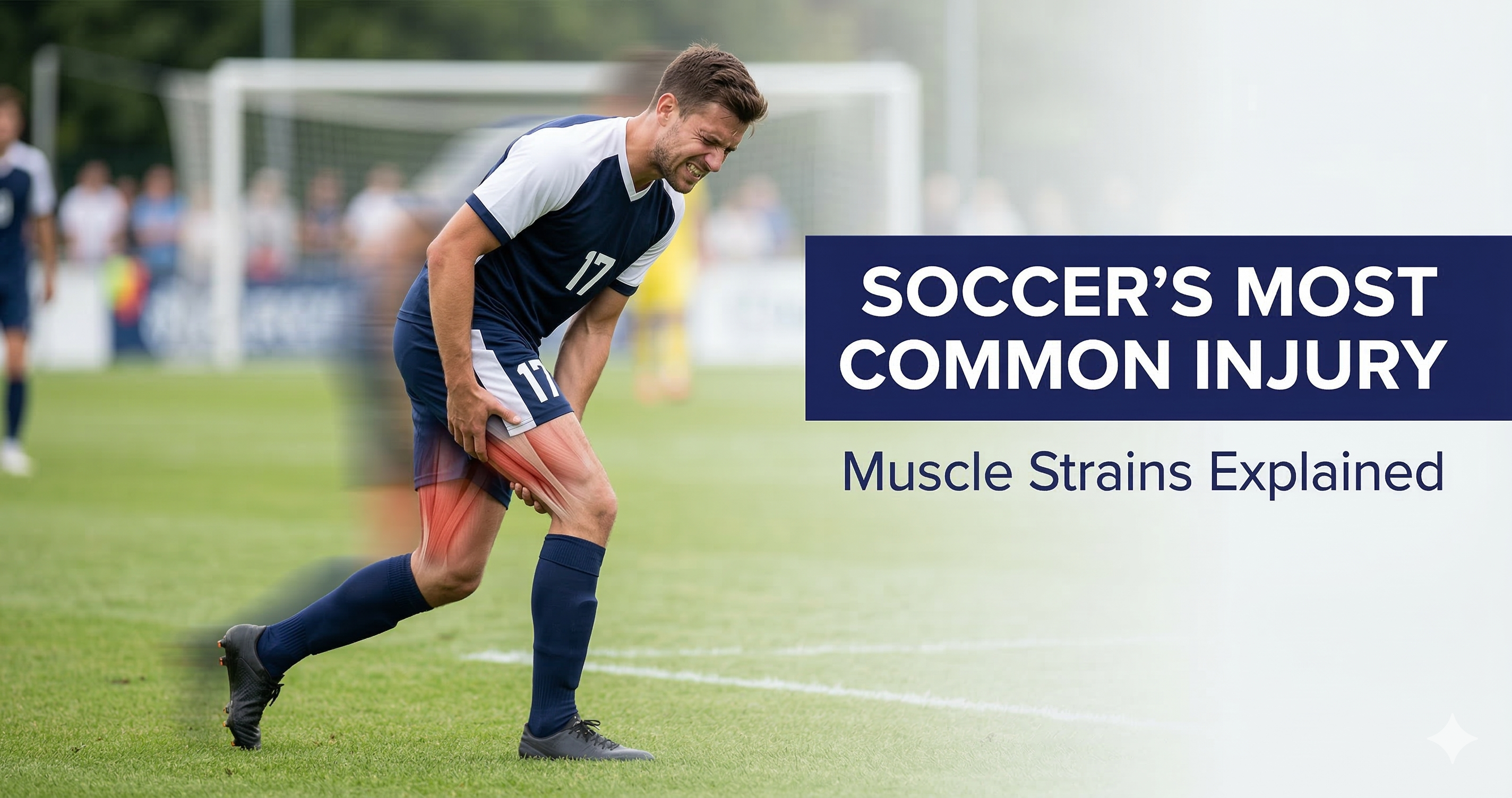
Soccer’s Most Common Injury: Muscle Strains Explained
Hamstring strains are the most common muscle injury in soccer players. These injuries typically occur during sprinting, sudden stops, or explosive kicking movements.
Soccer is one of the most physically demanding sports played by youth and adult athletes in the Kansas City metro. Quick accelerations, sudden stops, and explosive kicking movements place significant stress on the muscles of the legs.
One of the most common injuries we see in clinic at TruMove Physical Therapy in Overland Park is a muscle strain, particularly involving the hamstring, groin, or calf.
These injuries can range from mild tightness to significant tears that keep athletes out for weeks. Understanding why they occur and how to recover properly can make a major difference in how quickly an athlete returns to the field.
TL;DR: Muscle Strains in Soccer
Muscle strains are the most common injury in soccer players.
They typically affect the:
- Hamstrings (back of the thigh)
- Groin / hip adductors
- Calf muscles
They usually happen during sprinting, cutting, or kicking movements.
Most mild strains recover in 2–4 weeks, but improper rehab can lead to repeat injuries.
What Is a Muscle Strain?
A muscle strain occurs when muscle fibers are overstretched or partially torn.
This commonly happens when a muscle is forced to contract while lengthening — something that occurs frequently during soccer sprinting mechanics.
Examples include:
- Accelerating into a sprint
- Decelerating quickly
- Changing direction
- Striking a ball with force
These high-speed movements place large loads on the muscles responsible for hip and knee control.
The Most Common Soccer Muscle Strains
Hamstring Strains
Hamstring injuries are the most common muscle injury in soccer players.
The hamstrings run along the back of the thigh and are responsible for:
- Slowing the leg during sprinting
- Powerful hip extension
- Knee flexion
They are particularly vulnerable during high-speed running.
Athletes often describe the injury as:
- A sudden “grab” in the back of the thigh
- Sharp pain while sprinting
- Tightness that worsens with running
Groin Strains (Adductor Injuries)
Groin injuries are extremely common in soccer due to the amount of:
- Cutting
- Lateral movement
- Kicking
The adductor muscles help stabilize the pelvis and control side-to-side movement.
When overloaded, they can produce symptoms such as:
- Pain in the inner thigh
- Discomfort with kicking
- Pain when changing direction
Calf Strains
Calf muscles are responsible for explosive push-off during running and jumping.
A calf strain may cause:
- Pain when pushing off the foot
- Tightness when running
- Difficulty accelerating
These injuries are common in both youth and adult soccer players.
Muscle Strain Severity
Muscle strains are typically categorized into three grades.
| Grade | Description | Typical Recovery |
|---|---|---|
| Grade 1 | Mild muscle fiber damage | 1–3 weeks |
| Grade 2 | Partial muscle tear | 3–6 weeks |
| Grade 3 | Complete tear | Several months |
A proper evaluation helps determine the severity and appropriate rehabilitation plan.
Why Soccer Players Get Muscle Strains
Several factors increase the risk of strain injuries.
Sudden Increases in Activity
Many injuries occur early in a season when training load increases quickly.
Muscle Imbalances
Weak glutes, hamstrings, or core muscles can increase strain risk.
Fatigue
As muscles fatigue, they become less able to absorb force during sprinting.
Limited Mobility
Restricted hip mobility or poor flexibility can place extra stress on muscles.
Evidence-Based Recovery Strategies
Proper management is important to reduce reinjury risk.
Early steps usually include:
- Relative rest from painful activity
- Gradual mobility work
- Progressive strengthening
- Controlled return to running
Rehabilitation often focuses on:
- Eccentric hamstring strengthening
- Adductor strengthening
- Core stability
- Movement retraining
Research consistently shows that structured rehabilitation significantly reduces reinjury risk.
Muscle strains occur when muscle fibers are overstretched or torn during activity, which is why the right recovery progression matters so much after a soccer injury.
When to See a Physical Therapist
Many mild strains improve with rest, but some symptoms should be evaluated.
Seek care if you experience:
- Persistent pain lasting more than several days
- Significant swelling or bruising
- Difficulty walking or running
- Repeated muscle strains
Early evaluation can help identify the underlying movement issues contributing to the injury.
Muscle Strain Treatment in Overland Park
At TruMove Physical Therapy in Overland Park, muscle strain rehabilitation focuses on restoring strength, mobility, and movement mechanics so athletes can safely return to sport.
Treatment often includes:
- Movement evaluation
- Strength testing
- Running mechanics assessment
- Sport-specific rehab progression
Many athletes in the Kansas City metro can come directly to physical therapy without needing a physician referral.
If persistent pain or tightness is limiting your activity, a Movement Health Evaluation can identify the root cause and create a recovery plan.
Frequently Asked Questions
What muscle strain is most common in soccer?
Hamstring strains are the most common muscle injury in soccer players, particularly during sprinting.
How long does a soccer muscle strain take to heal?
Mild strains may recover in 1–3 weeks, while moderate strains may require 3–6 weeks before returning to full activity.
Should I stretch a pulled muscle?
Gentle mobility work may help during recovery, but aggressive stretching early after injury can worsen symptoms.
Can you keep playing with a hamstring strain?
It is usually not a good idea to keep playing through a hamstring strain. Continuing to sprint, cut, or kick through pain can worsen the injury and extend recovery time.
Can physical therapy help a muscle strain?
Yes. Physical therapy helps restore strength and movement patterns, which reduces the risk of repeat injury.
Read our other soccer related blog articles: