


 Overland Park
Blog
March 23, 2026
BPPV Treatment in Overland Park | Vertigo Physical Therapy | TruMove
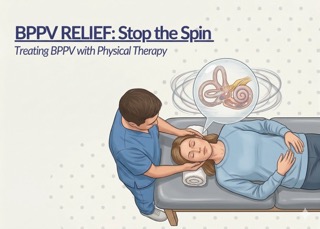
The Ultimate Guide to BPPV: Why Physical Therapy is the Gold Standard for Vertigo Relief
If you’ve ever experienced a sudden spinning sensation while tilting your head back or rolling over in bed, you know how unsettling it can be. This isn’t just feeling lightheaded, it’s vertigo, and for many people it can feel like the world suddenly shifted.
One of the most common causes of vertigo is Benign Paroxysmal Positional Vertigo (BPPV). While the name sounds complex, the treatment is often simple, drug-free, and highly effective when treated with specialized vestibular physical therapy.
In this guide, we explain what causes BPPV, why medication alone often isn’t enough, and how physical therapy can address the underlying cause of vertigo, often within a small number of treatment sessions, depending on the individual case.
What is BPPV? Understanding the “Rocks” in Your Inner Ear
To understand BPPV, we need to look inside the inner ear. Your vestibular system, your balance center, contains three semicircular canals filled with fluid that detect head movement and rotation.
Inside another structure called the utricle are tiny calcium carbonate crystals called otoconia (often referred to as “ear crystals”). Normally these stay in place. However, aging, minor trauma, or sometimes no clear reason can cause them to become dislodged.
When these crystals move into the semicircular canals, they disrupt the fluid signals sent to your brain. Your brain thinks you are spinning even when you are still. This mismatch causes vertigo.
The Most Common Type: Posterior Canal BPPV
Research shows BPPV accounts for up to 42% of peripheral vertigo cases, and about 80% involve the posterior canal. This is why proper testing is essential, treatment depends on identifying exactly which canal is involved.
Why Medication Alone Often Isn’t Enough
Many people first seek help at urgent care or the emergency room and may receive medications such as meclizine or diazepam.
While these may reduce nausea temporarily, research shows they do not correct the underlying mechanical cause of BPPV. The displaced crystals remain in the canal unless repositioned.
This can lead to:
- Repeat healthcare visits
- Increased fall risk, especially in older adults
- Lost work time and reduced activity
- Persistent dizziness lasting weeks or months
The Power of the Epley Maneuver
The most effective treatment for posterior canal BPPV is the Epley Maneuver, a canalith repositioning technique performed by trained physical therapists.
Through a precise sequence of head and body movements, gravity is used to guide displaced crystals back into their proper location where they no longer cause symptoms.
What Research Shows
- Very high success rates: A 2023 Frontiers in Neurology study found that repeating a modified Epley maneuver during the same session produced very strong results for patients with posterior canal BPPV.
- Better than medication alone: Repositioning maneuvers show significantly better outcomes than medication alone for addressing the cause of BPPV.
- Effective even in more complex cases: Bilateral BPPV cases have also shown strong outcomes with canalith repositioning treatment.
Is it BPPV or Something Else?
Not all dizziness is caused by BPPV. A key part of a vestibular physical therapy evaluation is identifying the true cause of symptoms.
| Condition | Primary Symptoms | Duration |
|---|---|---|
| BPPV | Spinning triggered by head movement | Seconds |
| Meniere’s Disease | Vertigo with hearing symptoms | 20 minutes to hours |
| Vestibular Migraine | Dizziness with light/sound sensitivity | Minutes to days |
| Vestibular Neuritis | Constant dizziness | Days to weeks |
Important safety note: Seek immediate medical attention if dizziness includes double vision, difficulty speaking, swallowing problems, sudden falls, or severe coordination issues.
Frequently Asked Questions About BPPV
Can I do the Epley Maneuver at home?
While videos exist online, professional evaluation is recommended first. Performing the wrong maneuver can worsen symptoms if the wrong canal is treated.
Will vertigo return?
BPPV recurrence occurs in about 15–20% of cases yearly. However, once diagnosed, follow-up treatment is usually quick and effective.
Why do I still feel off after treatment?
Some patients experience short-term residual dizziness. Vestibular rehabilitation exercises help the brain recalibrate and restore normal balance.
What to Expect at Your Physical Therapy Evaluation
At TruMove Physical Therapy in Overland Park, our vestibular specialists use evidence-based testing such as the Dix-Hallpike test to observe eye movements that indicate which canal is affected.
Once identified, the appropriate repositioning maneuver is performed. Many patients experience significant improvement after their first visit.
Every case of dizziness is unique, and proper diagnosis by a trained medical professional is important to ensure the correct treatment approach.
Summary: You Don’t Have to Keep Living in a Spin
You do not have to wait and hope vertigo resolves on its own. Evidence consistently shows physical therapy is one of the most effective treatments for BPPV.
Studies report very high success rates when the condition is properly diagnosed and treated with canalith repositioning techniques. Many patients experience rapid improvement without relying on medication alone.
If dizziness is affecting your daily life, a vestibular evaluation can identify the cause and help guide an evidence-based treatment plan designed to restore confidence and stability.
Sources
Chen X et al. Frontiers in Neurology (2023)
Karamy B et al. Laryngoscope (2022)
Yetiser S et al. Clinical Medicine Research (2022)
Sharif S et al. Academic Emergency Medicine (2023)
Providing Vertigo and BPPV Relief in Overland Park and the entire Kansas City Metro.
Our clinic specializes in vestibular physical therapy for patients in Overland Park, and surrounding areas. If you are searching for “vertigo treatment near me” or a “physical therapist for dizziness,” we are here to help.


