


 Overland Park
Blog
April 29, 2026
Jonathan India Shoulder Injury: Labrum Tear & Baseball Shoulder Pain | Overland Park PT
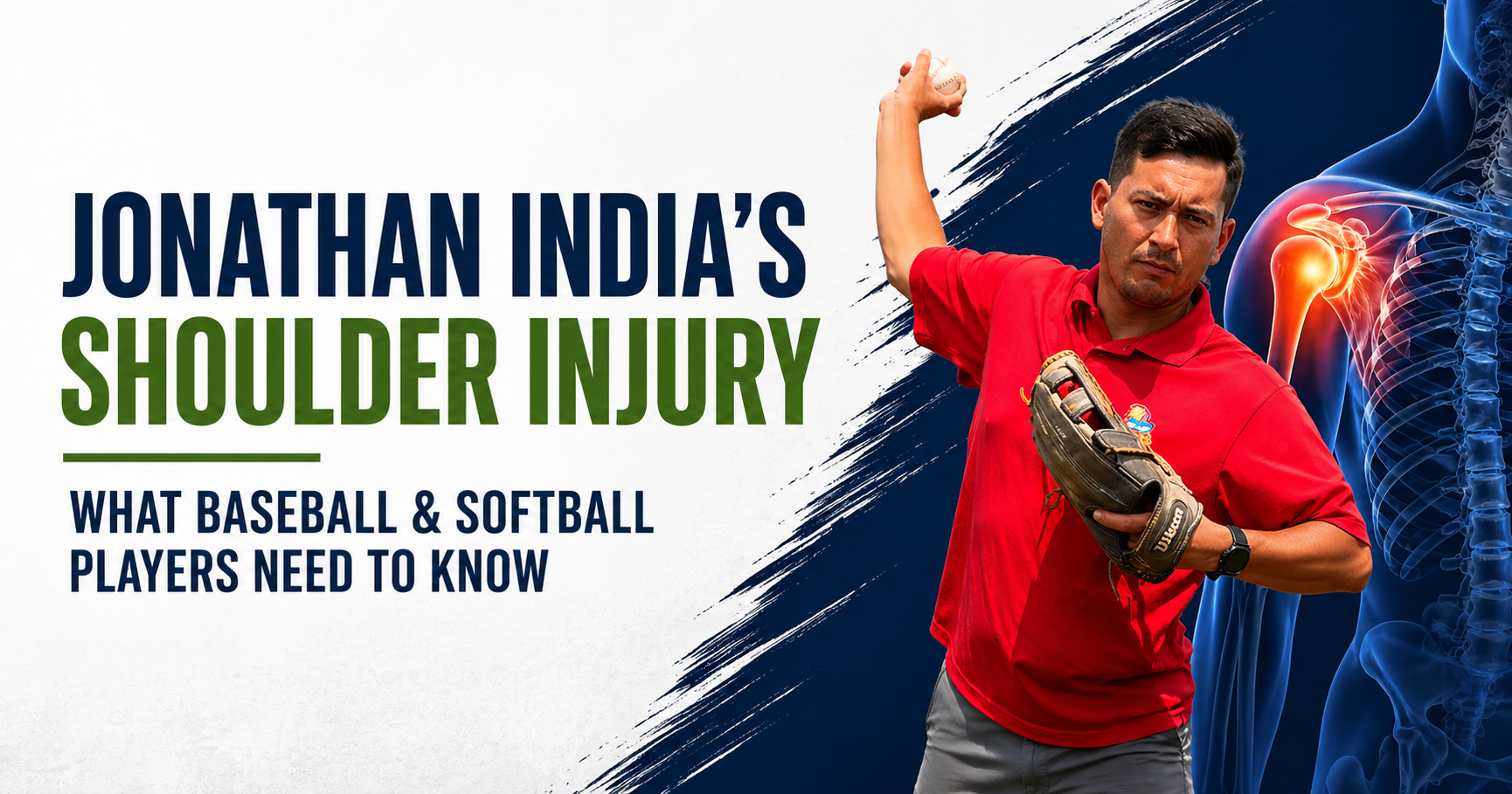
Kansas City Royals infielder Jonathan India recently underwent labral repair surgery after dealing with a left shoulder subluxation, ending his season. For Royals fans, it is a tough loss. For baseball and softball families, it is also a good reminder: shoulder instability and labrum injuries are not just “pro athlete problems.”
At TruMove Physical Therapy in Overland Park, we work with athletes of all ages who are dealing with shoulder pain, throwing discomfort, loss of power, and nagging symptoms that often start small before becoming more serious.
This article breaks down what a shoulder subluxation and labral injury actually mean, why these issues matter for baseball and softball players, and how young athletes can reduce their risk through better strength, mobility, workload management, and early intervention.
What Happened to Jonathan India?
According to MLB.com, India was placed on the injured list with a left shoulder subluxation before ultimately undergoing labral repair surgery. Royals manager Matt Quatraro noted that the shoulder had become more difficult to stabilize and that pain worsened with dives, jumps, slides, and other unavoidable baseball movements.
That detail matters because shoulder injuries in baseball are not always caused by one dramatic throw. Sometimes they build over time as the shoulder becomes less stable, mechanics change, and the athlete keeps trying to compete through pain.
For younger baseball and softball players, that is one of the biggest lessons: a shoulder injury often starts as a warning sign before it becomes a shutdown, surgery, or lost season.
What Is a Shoulder Subluxation?
A shoulder subluxation is a partial dislocation. The ball of the upper arm bone shifts partly out of the shoulder socket and then moves back into place.
The shoulder is built for motion, but that mobility comes with a tradeoff: it depends heavily on soft tissue, muscle control, and joint coordination to stay stable.
When the shoulder starts to feel loose, unstable, painful, or unreliable, it may be a sign that the structures supporting the joint are being stressed.
Common Signs of Shoulder Instability
- A slipping, shifting, or “dead arm” feeling
- Pain after throwing or swinging
- Loss of velocity or throwing confidence
- Difficulty reaching overhead
- Shoulder soreness that lasts into the next day
- Avoiding certain throws or changing mechanics
What Is the Labrum?
The labrum is a ring of cartilage that helps deepen the shoulder socket and improve stability. You can think of it like a soft rim that helps keep the ball of the shoulder centered during movement.
In throwing athletes, the labrum has to tolerate repeated high-speed motion, deceleration, and stress. When the shoulder is unstable or overloaded, the labrum can become irritated or torn.
Labrum injuries can happen from a single traumatic event, such as diving for a ball, sliding, or landing awkwardly. They can also develop gradually from repeated stress, especially when an athlete’s shoulder, spine, and hips are not working together efficiently.
Why Baseball and Softball Players Are at Risk
Throwing is one of the fastest and most demanding motions in sports. The shoulder has to create speed, maintain control, and then slow the arm down safely after release.
Watch: Shoulder Stress in Throwing Athletes
Quick look: This short video shows what we’re watching for when shoulder stress and early breakdown start showing up in baseball and softball players.
If you’re noticing anything similar with your athlete, it’s worth addressing early, before it turns into a shutdown or longer-term issue.
For baseball and softball players, shoulder injuries often develop because of a combination of factors:
- High throwing volume: Too many throws without enough recovery can overload the shoulder.
- Poor scapular control: The shoulder blade must move well for the arm to work efficiently.
- Limited thoracic mobility: A stiff mid-back can force the shoulder to do too much.
- Hip and trunk limitations: Power should come from the ground up, not only from the arm.
- Playing through pain: Small symptoms can become bigger problems when ignored.
The shoulder is rarely the only issue. In many athletes, shoulder pain is the result of a chain reaction involving the neck, upper back, rib cage, core, hips, and throwing mechanics.
What Parents Should Watch For
Youth athletes are often good at hiding discomfort because they want to keep playing. That makes it important for parents and coaches to watch for changes in performance and behavior.
Warning Signs in Young Baseball and Softball Players
- Loss of throwing velocity
- Reduced accuracy
- Complaints of shoulder soreness after games or practices
- Taking longer to warm up
- Changing arm slot or throwing mechanics
- Not wanting to throw as much
- Pain with batting, diving, sliding, or overhead movement
- Feeling like the shoulder is loose, unstable, or weak
A young athlete does not need to be in severe pain to need help. In fact, the best time to address a shoulder issue is often when symptoms are still mild.
How to Help Prevent Shoulder Injuries in Baseball and Softball
Not every injury can be prevented, but many shoulder issues can be reduced by improving how the athlete moves, throws, recovers, and trains.
1. Build Shoulder Blade Strength and Control
The shoulder blade is the foundation for the throwing arm. If it does not move or stabilize well, the shoulder joint has to work harder.
Athletes need more than band exercises. They need strength and control through full athletic movement: reaching, rotating, decelerating, and changing direction.
2. Improve Mid-Back and Rib Cage Mobility
Throwing requires rotation through the trunk. If the thoracic spine and rib cage are stiff, the shoulder may compensate by creating extra motion and stress.
Good rotation helps the athlete use the whole body instead of relying only on the arm.
3. Train the Hips and Core
Throwing power starts from the ground. The legs, hips, and trunk should create and transfer force before the arm finishes the motion.
When the hips and core are not contributing well, the shoulder often becomes the primary power source — and that can increase injury risk.
4. Manage Throwing Volume
Pitch counts matter, but they are not the whole story. Athletes also accumulate throws from warmups, practices, showcases, lessons, multiple teams, and other positions.
Parents should pay attention to total workload, not just innings pitched.
5. Do Not Ignore Early Symptoms
Pain, tightness, reduced velocity, or a “dead arm” feeling are signals worth investigating. Early treatment can often prevent a small issue from becoming a longer-term setback.
Where Physical Therapy Fits
Physical therapy is not just for after surgery. For baseball and softball players, a sports-focused physical therapy evaluation can identify why the shoulder is being overloaded before the problem gets worse.
At TruMove Physical Therapy, we look at:
- Shoulder strength and stability
- Scapular control
- Thoracic spine mobility
- Hip rotation and trunk control
- Throwing-related movement patterns
- Return-to-throwing readiness
The goal is not just to reduce pain. The goal is to help the athlete move better, throw with more confidence, and return to sport safely.
What If Surgery Is Needed?
In some cases, labral repair surgery may be the right decision, especially when instability is significant or symptoms are limiting sport and daily life.
When surgery is needed, physical therapy still plays a major role. A proper rehab plan helps restore range of motion, rebuild strength, improve shoulder control, and guide the athlete through a structured return-to-throwing progression.
For youth athletes, this process should be individualized. Returning too quickly without meeting strength and control milestones can increase the risk of ongoing issues.
The Big Takeaway for Young Athletes
Jonathan India’s injury is a reminder that shoulder instability can affect athletes at every level. At the pro level, it can end a season. At the youth level, it often starts quietly: a little soreness, a dip in velocity, or a throw that no longer feels right.
Parents and coaches should not panic when an athlete reports shoulder pain, but they also should not ignore it. The earlier a movement issue is identified, the better chance the athlete has of staying healthy and continuing to play the sport they love.
If your baseball or softball player is dealing with shoulder pain, loss of velocity, tightness, or a nagging throwing issue, a sports physical therapy evaluation can help identify what is really going on.


