


 Overland Park
Blog
January 4, 2026
Physical Therapy vs Chiropractor vs Massage | Overland Park KS
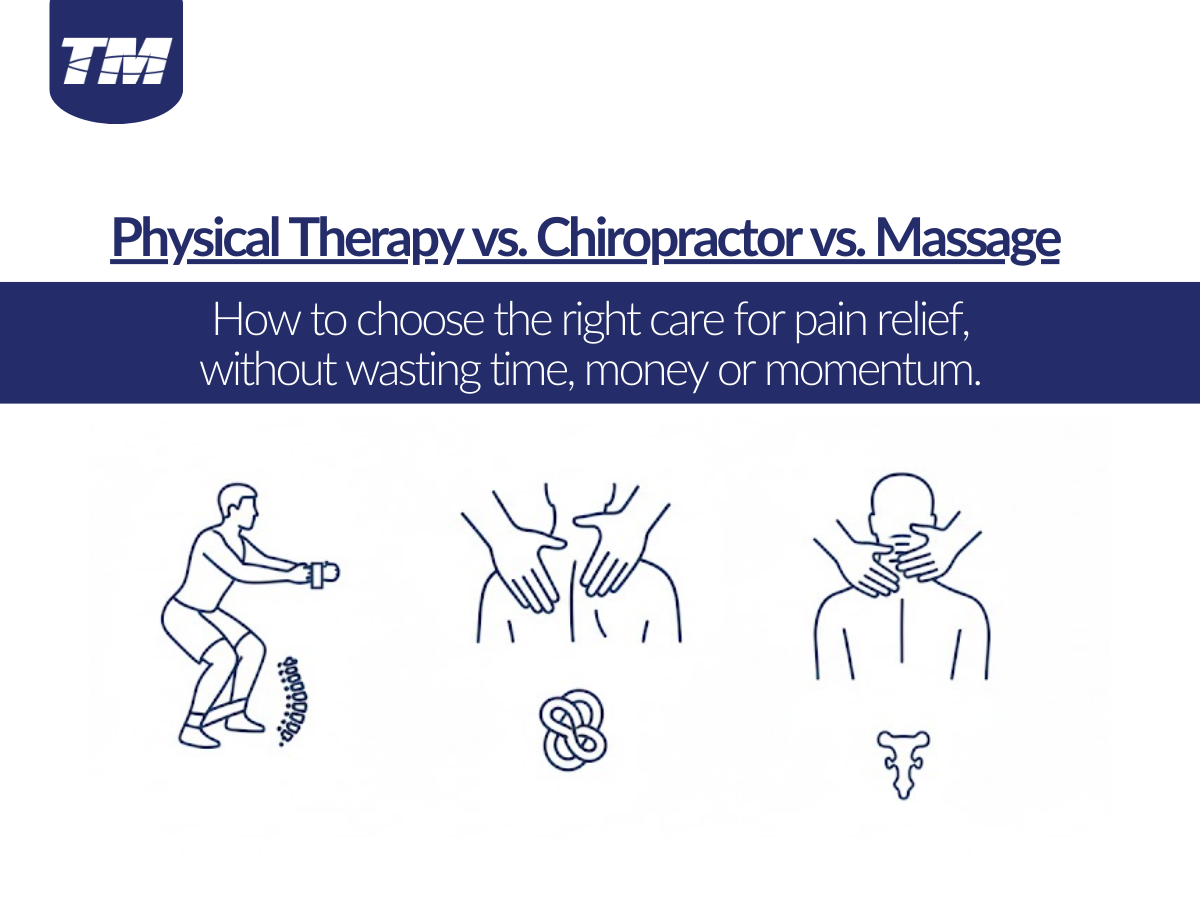
Physical Therapy vs. Chiropractor vs. Massage: Which Is Right for Your Pain?
When pain starts interfering with daily life, the next step matters. A smart choice can lead to lasting improvement. The wrong choice can keep you stuck in a loop of short-term relief.
People in Overland Park often ask the same question when back pain, neck stiffness, joint discomfort, or lingering muscle tension will not quit. Should I call a physical therapist, a chiropractor, or a massage therapist?
All three can help in the right situation. The difference is what each approach is designed to do and how well it holds up when pain returns. This guide breaks down the differences so you can choose the best starting point and avoid wasting time or money.
Local note for Overland Park, KS: Kansas is a Direct Access state. That means you can start with a licensed physical therapist without first seeing a physician.
Quick Comparison: Physical Therapy vs. Chiropractor vs. Massage
| Feature | Physical Therapy | Chiropractor | Massage Therapy |
|---|---|---|---|
| Primary Focus | Movement, strength, and function | Joint mobility and alignment | Muscle tension and relaxation |
| Care Style | Active plan plus hands-on care | Primarily passive adjustments | Passive soft tissue work |
| Long-Term Goal | Independence and prevention | Ongoing symptom management | Temporary relief |
| Typical “Why it helps” | Build capacity so pain is less likely to return | Reduce stiffness and restore motion quickly | Reduce tone and sensitivity in tight tissue |
| Referral Needed? | No (Direct Access in Kansas) | No | No |
How to Choose the Right Starting Point
If you want the fastest practical decision rule, start here.
- Choose physical therapy when pain is recurring, limits activity, feels unstable, or shows up during workouts, golf, or work tasks.
- Choose chiropractic care when you feel acutely “stuck,” stiff, or restricted and you typically respond well to adjustments.
- Choose massage therapy when muscle tightness, stress, and soreness are the main drivers and you want tissue relief or recovery support.
Many people in Overland Park have tried one option, felt better for a day or two, then watched symptoms return. That pattern is often a clue that the foundation is missing. The foundation is usually strength, load tolerance, and movement control.
What Physical Therapy Actually Addresses
Physical therapy looks at how your body moves as a system. It identifies the mechanical and capacity problems that keep triggering pain. In other words, it answers the question, “Why does this keep happening?”
A physical therapist evaluates:
- Joint mobility and stability
- Strength and coordination
- Posture and movement habits
- Balance and neuromuscular control
- Activity demands at work, at home, and in sport
At TruMove Physical Therapy in Overland Park, treatment typically includes:
- Targeted mobility and strengthening to restore capacity
- Manual therapy to improve joint and tissue motion
- Movement retraining for walking, lifting, stairs, running, or golf mechanics
- Education so you can manage symptoms independently
- A clear plan with progressions, not random sessions
The goal: reduce pain and improve function in a way that holds up outside the clinic.
Where Chiropractic Care Fits
Chiropractic care primarily focuses on spinal and joint adjustments. Many people feel quick changes in stiffness or comfort after an adjustment, especially when a joint is acutely restricted.
Chiropractic care can be a good fit when:
- You feel a sudden restriction and need mobility quickly
- Your symptoms are driven by joint stiffness and you typically respond well
- You are pairing adjustments with a strengthening and movement plan
When pain keeps returning, it often means the underlying contributors have not changed. Strength, tissue tolerance, and movement habits still matter. If those are not addressed, relief can be temporary.
Where Massage Therapy Fits
Massage therapy targets muscles, fascia, and connective tissue. It can reduce tension, improve circulation, and support recovery. It also helps many people feel calmer and less guarded, which matters when pain has been around for a while.
Massage is often helpful for:
- Muscle tightness and soreness
- Stress-driven tension patterns
- Post-workout recovery
- Short-term symptom relief
Massage works best alongside an active plan when pain is persistent. If the root issue is weakness, poor movement control, or joint instability, soft tissue work alone rarely fixes the long-term problem.
Physical Therapy vs. Chiropractor for Back Pain or Neck Pain
If your pain is recurring or limits activity, physical therapy is often the more effective long-term option. Adjustments can reduce stiffness. PT builds the strength and control that keep symptoms from returning.
For back and neck pain, PT commonly addresses:
- Core strength and spinal stability
- Hip and thoracic mobility that changes how your spine loads
- Posture and workstation habits
- Lifting mechanics and carrying tolerance
- Walking, running, or sport mechanics when relevant
If you want to get back to golf, workouts, or long days at work without flare-ups, that is a capacity problem. Capacity problems respond well to an active plan.
Physical Therapy vs. Massage for Pain Relief
Massage can be a great first step when stress, tension, or soreness is the dominant driver. Physical therapy is usually the better step when pain is tied to movement, strength, or repeated aggravation.
Here is a useful way to think about it:
- Massage often changes how you feel today.
- Physical therapy changes what your body can do next month.
Many people benefit from massage while doing PT. Massage can reduce guarding and make it easier to move well. PT builds the foundation so symptoms stop returning.
Do I Need a Doctor’s Referral for Physical Therapy in Kansas?
No. Kansas allows Direct Access. You can see a licensed physical therapist without first seeing a physician.
Direct Access helps because it allows:
- Faster access to care
- Earlier intervention
- Fewer delays in recovery
Some insurance plans still have their own rules, but clinically you can start with PT. If you are in Overland Park and you want clarity on how to start, we can walk you through the simplest option.
Training and Approach: What’s Different?
People often want to know how training compares and why approaches feel different.
- Physical therapists earn a Doctor of Physical Therapy (DPT) degree. Training emphasizes anatomy, biomechanics, pain science, exercise prescription, and movement-based rehab.
- Chiropractors earn a Doctor of Chiropractic (DC) degree. Training emphasizes spinal and joint manipulation and related diagnostic frameworks.
- Massage therapists complete certification programs focused on soft tissue techniques, relaxation, and recovery support.
All three can be skilled, ethical, and helpful. The practical difference is the toolset and the plan. Physical therapy is built around changing capacity and movement patterns so you need less care over time.
Why Pain Often Comes Back After Passive Care
This is the most common story we hear: “I felt better after an adjustment or massage, but it came right back.” That often happens when symptoms improve but the body still cannot tolerate the demands of life.
Common reasons pain returns:
- Strength and endurance did not improve
- Joint stability did not change
- Movement habits stayed the same
- Work, sport, or lifestyle loads increased again
- Sleep, stress, and recovery stayed poor
Physical therapy is designed to change those variables. It gives you a plan you can execute, measure, and progress.
When Physical Therapy Is the Best Choice
PT is often the best fit if you:
- Want long-term results, not just short-term relief
- Have recurring pain or repeated flare-ups
- Feel unstable, weak, or hesitant to move
- Want to return to golf, workouts, running, or a physically demanding job
- Prefer learning how to manage and prevent pain yourself
At TruMove, the goal is independence. The plan is designed so you rely on your body, not weekly appointments.
Can Physical Therapy, Chiropractic Care, and Massage Work Together?
Yes. Many people do best with a combined strategy.
- Massage can reduce tone and help you move with less guarding.
- Adjustments can help restore mobility when a joint is acutely restricted.
- Physical therapy can build the strength and movement control that makes results last.
The key is knowing which approach should be the foundation. For most movement-related pain, that foundation is physical therapy.
FAQ
Is physical therapy better than a chiropractor for lower back pain?
If pain is recurring, limits activity, or returns after passive care, PT is often the better long-term choice. Chiropractic care can reduce stiffness. PT addresses strength, stability, and movement habits that commonly drive flare-ups.
What if my pain is mostly muscle tightness?
Massage can be a great starting point when tension and stress are dominant. If tightness keeps returning, or if it is paired with weakness and limited motion, PT is usually the best next step.
How long does physical therapy take to work?
Many people notice early improvements within the first few visits. Long-term results depend on the condition and consistency. The more we can build strength and tolerance, the more durable the outcome tends to be.
Can I start PT first in Overland Park without seeing my doctor?
Yes. Kansas is a Direct Access state. You can start with PT without a physician referral, though insurance requirements can vary by plan.
What if I want help choosing the best option?
That is exactly what a short screen or a full movement evaluation is for. You should not have to guess which path is right.
Still Not Sure Which Path Is Right for You?
If you are unsure whether physical therapy, chiropractic care, or massage is the best next step, we can help.
Schedule an assessment or a full 40-minute movement evaluation with TruMove Physical Therapy in Overland Park. You will leave with clarity and a plan, with no pressure.


